Wat Chaiyamangalaram: Stories, Stillness and the Middle Way
by John Unwin
Wat Chaiyamangalaram, Penang — photographed on March 26, 2025.
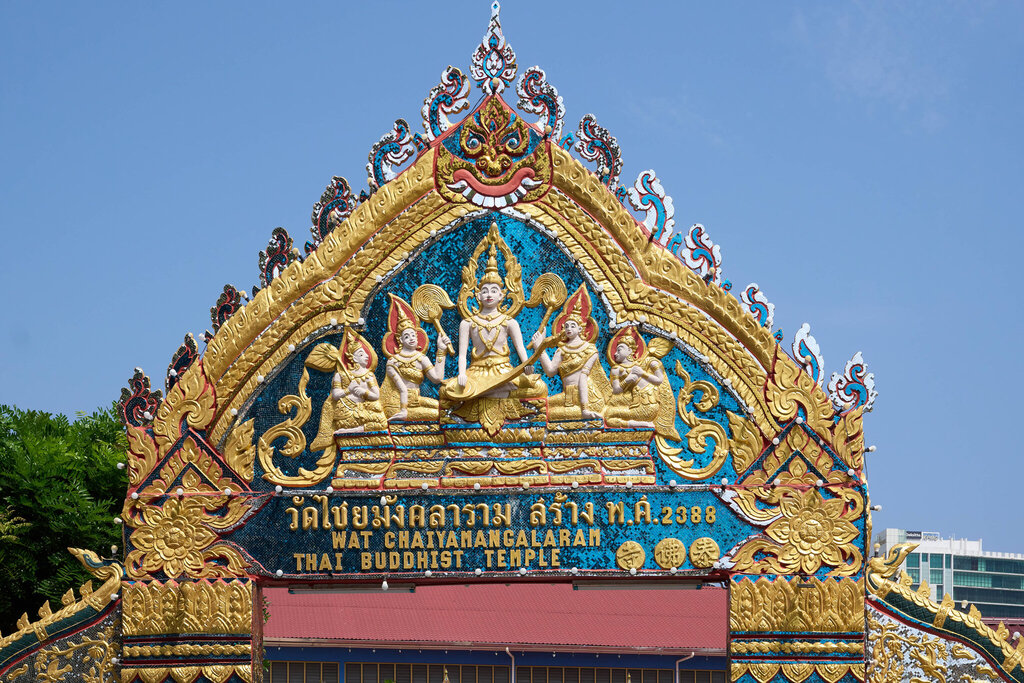 The ornate entrance of Wat Chaiyamangalaram.
Founded in 1845, Wat Chaiyamangalaram is one of Penang’s best-known Thai Buddhist temples. The date 2388 above the entrance uses the Buddhist Era calendar and corresponds to 1845 CE. Its gilded decoration, steep gables, mythical figures and Thai script reflect the heritage of Penang’s Thai Buddhist community. Directly opposite is the Dhammikarama Burmese Buddhist Temple, placing two distinct Southeast Asian Buddhist traditions side by side.
Stepping inside after the bustle of a tour group was a stark contrast. The incense, calm and quiet created a moment of stillness. Yet the interior is so full of colour, decoration and sacred objects that it can also feel overwhelming. At its centre is the monumental reclining Buddha, approximately 33 metres—or 108 feet—long.
The temple’s murals offer another way to approach the space. Each tells a story, but each also asks for more attention than a short tour may allow.
The perfection of generosity
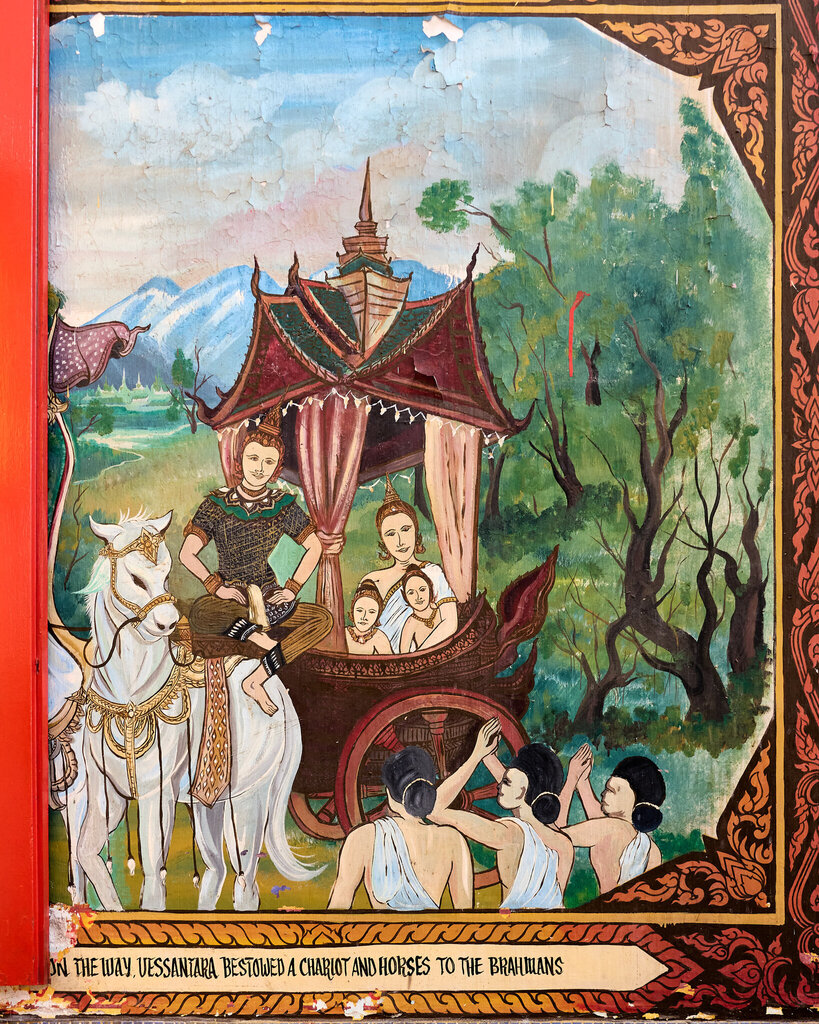 Prince Vessantara gives away his horses and chariot.
This scene comes from the Vessantara Jātaka, a story of one of the Buddha’s previous lives. Prince Vessantara was known for extraordinary generosity. While travelling into exile with his wife Maddī and their children, he gives his horses and chariot to Brahmins who ask for them. The story represents dāna pāramī, the perfection of generosity developed over many lifetimes on the path towards Buddhahood.
Sujātā and the Middle Way
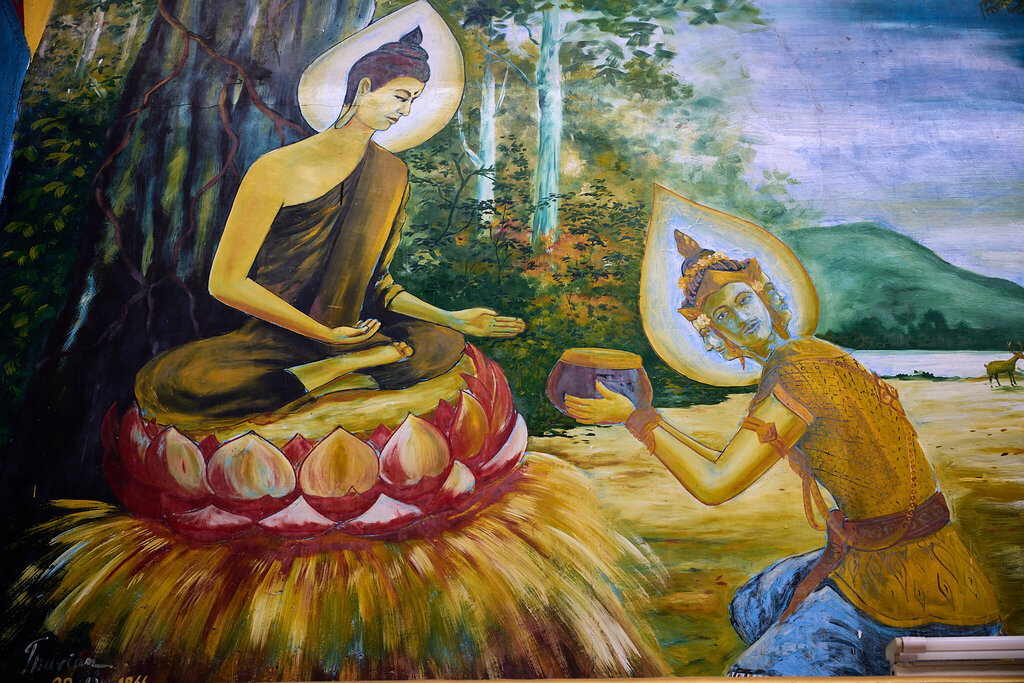 Sujātā offers milk-rice to Siddhartha.
After years of severe ascetic practice, Siddhartha Gautama realised that self-mortification was not the path to awakening. Sujātā offered him a bowl of nourishing milk-rice, allowing him to regain his strength. Soon afterwards, he sat beneath the Bodhi tree and attained enlightenment. The episode marks his discovery of the Middle Way, avoiding both sensual indulgence and extreme self-denial.
Nandopananda, the nāga king
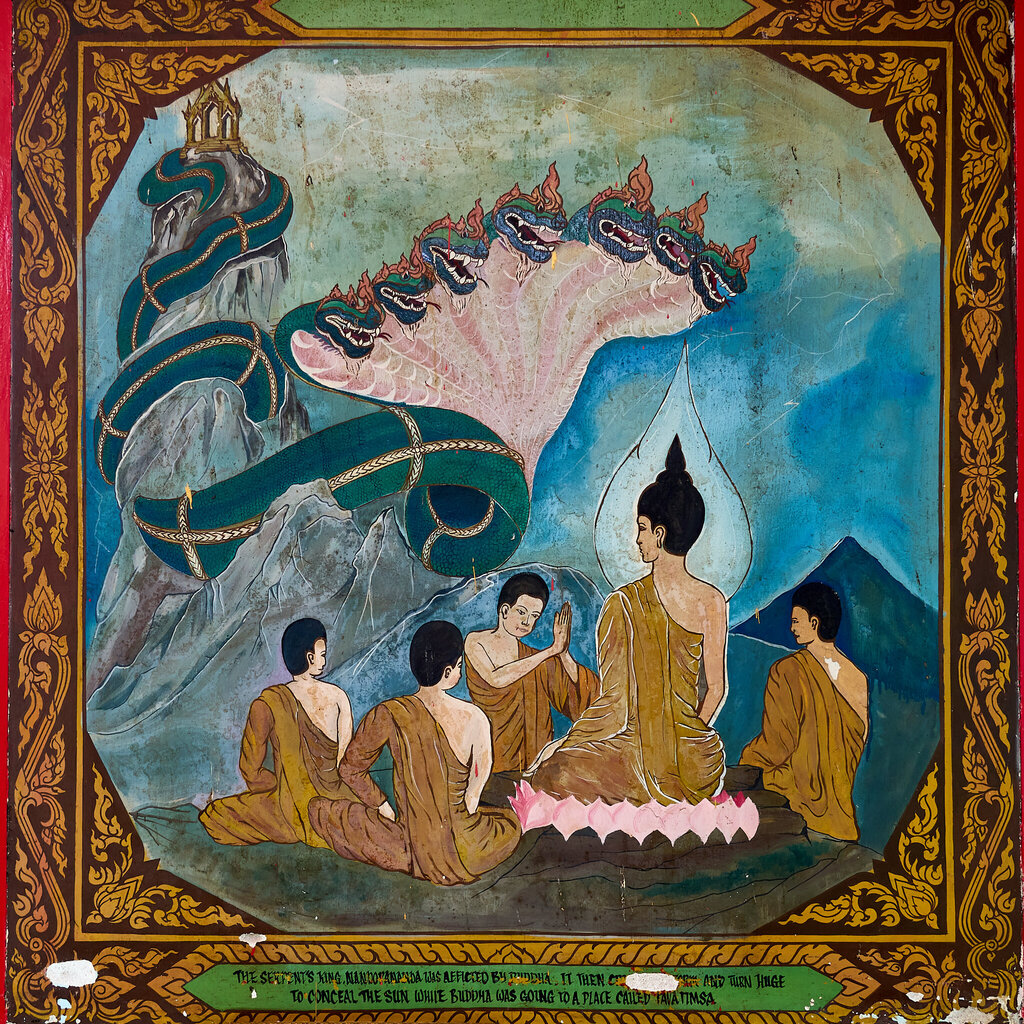 Nandopananda coils above the Buddha and the gathered monks.
According to Buddhist tradition, the powerful nāga king Nandopananda became angry as the Buddha and his monks travelled through the heavens towards Tāvatiṃsa. He wrapped his enormous body around Mount Meru and spread his many-headed hood across the sky. The Buddha’s disciple Moggallāna, renowned for supernatural powers, subdued him. In the painting, the great green serpent coils around the mountain while the Buddha sits below, surrounded by monks.
The reclining Buddha
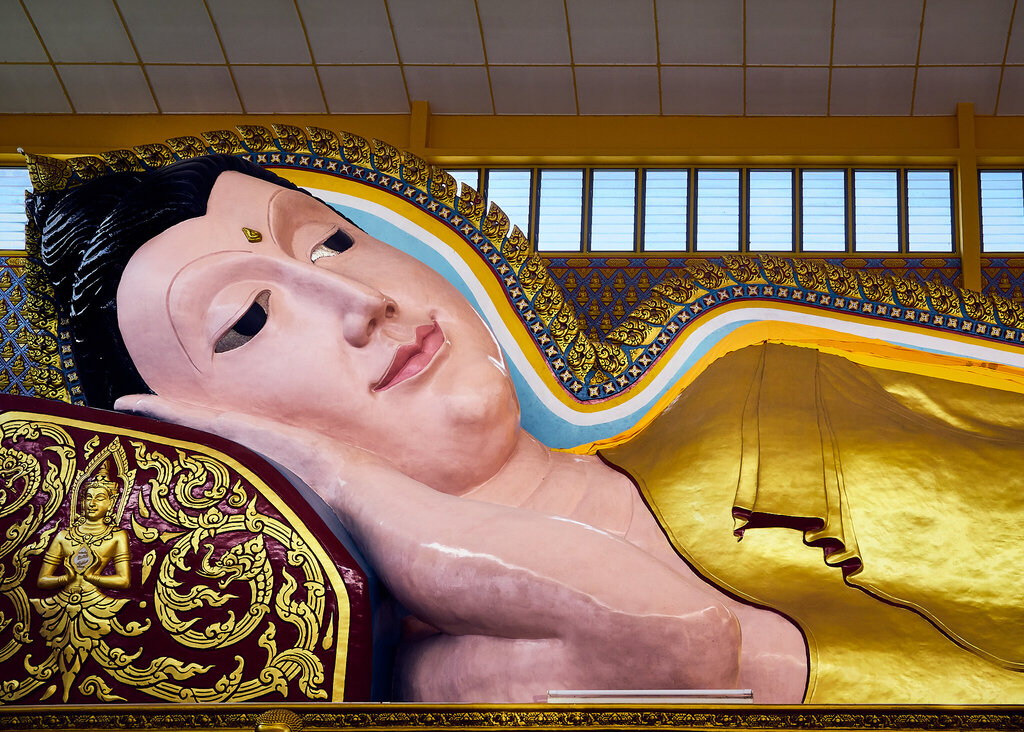 The reclining Buddha represents the end of the Buddha’s earthly life and his entry into parinirvana.
The Buddha rests peacefully on his right side, his head supported by his hand. The serene expression emphasises release rather than suffering. It brings the sequence of stories to a quiet conclusion, even within an interior crowded with visual detail.
Looking again
Visiting many places in a short time can make it difficult to reflect deeply on what one sees. In the moment, the richness of this temple—and especially the scale of the reclining Buddha—created a kind of sensory overload. Looking back at these photographs from 2025 has allowed me to notice details that I missed during the visit and to spend more time with the meaning of the stories.
The experience reminded me of the importance of the Middle Way, not just as a philosophical idea but as a daily practice. It is a reminder to be kind to oneself, especially when the pace of life or travel feels overwhelming.
tags: Wat Chaiyamangalaram - Penang - Malaysia - Buddhism - Buddhist art - temple - Middle Way - reclining Buddha - murals - photography